Virginia Valli (June 10, 1898 – September 24, 1968) was an American actress of stage and screen whose film career spanned the silent era through the early sound years of the 1930s.
Born Virginia McSweeney in Chicago, Illinois, she began acting with a stock company in Milwaukee and also appeared in films for Essanay Studios in her native Chicago beginning in 1916.
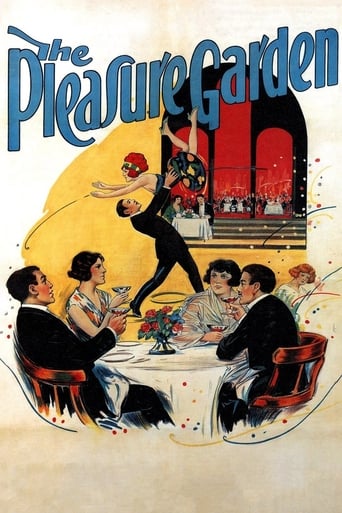
Through the 1920s Valli remained a steady presence on screen, and by the mid-1920s she was an established star at Universal. In 1924 she took the female lead in King Vidor's Southern Gothic Wild Oranges, a film rediscovered after decades languishing in studio vaults. That same period saw her in the romantic comedy Every Woman's Life, which explored "the man she could have married, the man she should have married and the man she DID marry." The years 1924 to 1927 yielded the majority of her output, including Alfred Hitchcock's first feature, The Pleasure Garden, Paid to Love (1927) opposite William Powell, and Evening Clothes (1927) with Adolphe Menjou. In 1925 she appeared with Thomas Meighan in The Man Who Found Himself, produced at a Long Island, New York studio.
Her first talking picture was The Isle of Lost Ships (1929), but her career soon faded. Unable to secure a suitable studio, she left films after the quickie Night Life in Reno (1931).
Valli was first married to George Lamson, with whom she shared a small bungalow in Hollywood near the Hollywood Hotel. In 1931 she wed actor Charles Farrell, remaining his wife until her death. The couple settled in Palm Springs, where she became a longtime social fixture.
After suffering a stroke in 1966, she died two years later at age 70 in Palm Springs, California, and was buried in that city's